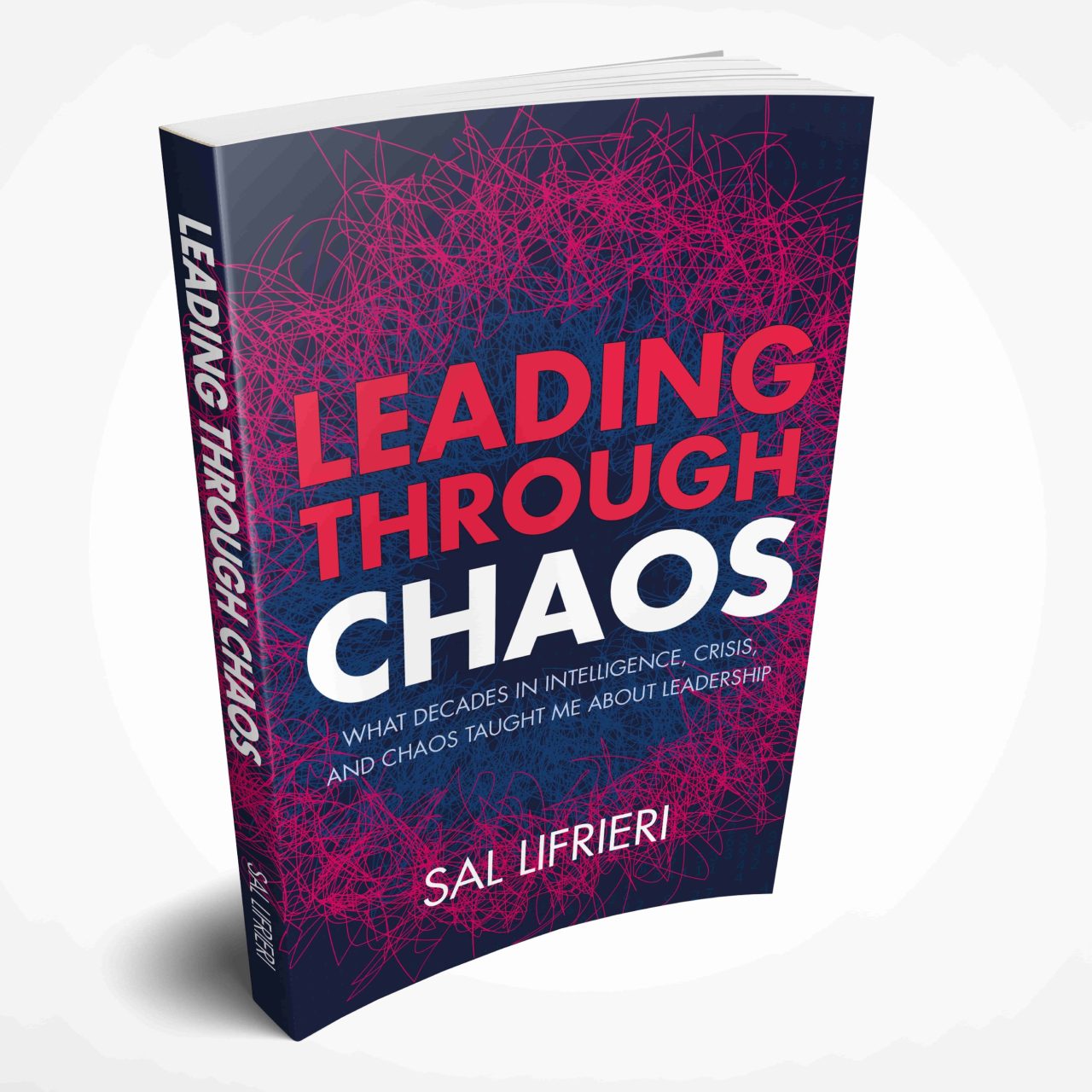
Blog Post – Based on Leading Through Chaos by Sal Lifrieri
Here’s something I’ve seen play out across law enforcement, intelligence work, and corporate boardrooms. A leader senses something is off. The numbers look fine. The project’s approved. The team is nodding. But something doesn’t sit right. They feel it.
And then they do nothing.
I want to be clear about what this is and what it isn’t. It’s not stupidity. It’s not exactly cowardice. It’s a very specific gap, the space between recognizing danger and deciding to act on it. In forty years, I’ve seen that gap swallow careers, derail organizations, and, in some cases, cost lives. The frustrating part is that almost every time, the leader already knew.
The reason they don’t move is usually simpler than people want to admit. When the stakes are high and eyes are on you, stakeholders want results, the board wants answers, and your reputation is on the edge. Your judgment gets hijacked. You stop making decisions to fix the actual problem. You start making decisions to make yourself feel less anxious.
I’ve watched supervisors spot a vulnerability and stay quiet because raising it might slow the timeline or put someone above them in an awkward position. I’ve watched analysts flag real threats and get waved off because addressing them would mean admitting the prior plan had a hole. The fear of being exposed or questioned shapes more decisions than any policy document ever will.
Delay feels safe. This is where strong security advisory and decision support structures make a difference. It keeps the project moving, avoids uncomfortable conversations, and preserves relationships. What it doesn’t do is make the risk go away. The risk sits there and grows. And when things finally fall apart, as they do, the same leader who sensed trouble early is left asking themselves why they didn’t act when they still had the chance.
Listen to how leaders talk when they’re rationalizing inaction. “We need more data.” “Let’s not overreact.” “We’ll revisit this next quarter.” Strong leaders sound different early in a developing situation. They say, “What are we missing?” “What would this look like if it got worse?” “Who needs to look at this now, not later?”
The difference is not confidence. It is a willingness to engage uncertainty instead of managing around it. The language of caution is often used to justify inaction. In strong environments, it is used to move decisions forward.
Leaders don’t need perfect information to act. They need a threshold. The best ones decide in advance what signals trigger action, who gets looped in, and what happens next. That removes hesitation in the moment and makes early intervention normal instead of exceptional.
Breaking this habit takes one habit. When you sense risk and find yourself stalling, stop and ask a single, honest question: Am I waiting because I genuinely need more information, or because I’m avoiding the consequences of acting on what I already know?
I’d also push back on the idea that thinking about downside scenarios is pessimistic. It isn’t. It’s stress testing your plan before reality does it for you. What if your core assumption is wrong? What if the timeline slips? What if the other side doesn’t respond as expected? Leaders who ask those questions early build contingencies. Leaders who avoid them scramble when a crisis hits and act surprised, as if no one could have seen it coming.
In Leading Through Chaos, these moments are where leadership either holds or breaks. Not during the crisis itself, but in the decisions made when something first feels off.